Agentic use case
Where Multi Agent Platform becomes governed execution.
It starts with one message in a busy inbox. Someone needs to answer quickly, but they also need to know whether the wording creates a promise, exposes sensitive data, misses a complaint trigger, changes a price, or leaves the organisation carrying risk no one has seen.
What makes it harder in the real world: The email may contain commercial commitments, confidential information, contractual terms, regulated language, payment implications, complaint triggers, legal exposure or security-sensitive attachments. Treating it as a simple drafting task creates operational and compliance risk.
What Advanze changes: Turn an inbound email into a governed execution flow where specialised agents review context, risk, commitments, approvals and next actions before a response or system action is completed.
Classifier AgentIdentifies topic, intent, urgency, sensitivity, required systems, likely risk and the correct processing path.
Business Content AgentUnderstands intent, customer context, urgency, tone, requested outcome and relevant business history.
Security and CISO AgentChecks sender risk, attachment risk, data sensitivity, access rights, phishing indicators and information sharing boundaries.
Legal AgentReviews commitments, liability language, contractual terms, disclaimers and escalation requirements.
Compliance AgentChecks regulated wording, retention obligations, complaint handling rules, approval thresholds and audit requirements.
ChallengeThe inbox is full, the customer is waiting and the answer looks simple. But the message could be an account request, a complaint, a missing-information case, an instruction to move money, a pricing dispute, a legal notice or a security risk.
OrchestrationThe classifier agent becomes the first orchestration point in the process. It reads the request, understands the topic and risk, then routes work to the right processing agent and the right guardrail agents before anything important is said or done.
SuccessThe response is not just faster. It is calmer, safer and more accountable. The organisation knows what was classified, which agents reviewed it, what each agent was allowed to do, who approved the action and what changed in the systems.
Why AI execution needs architecture
The work needs context, controls and clear permissions before automation can safely act.
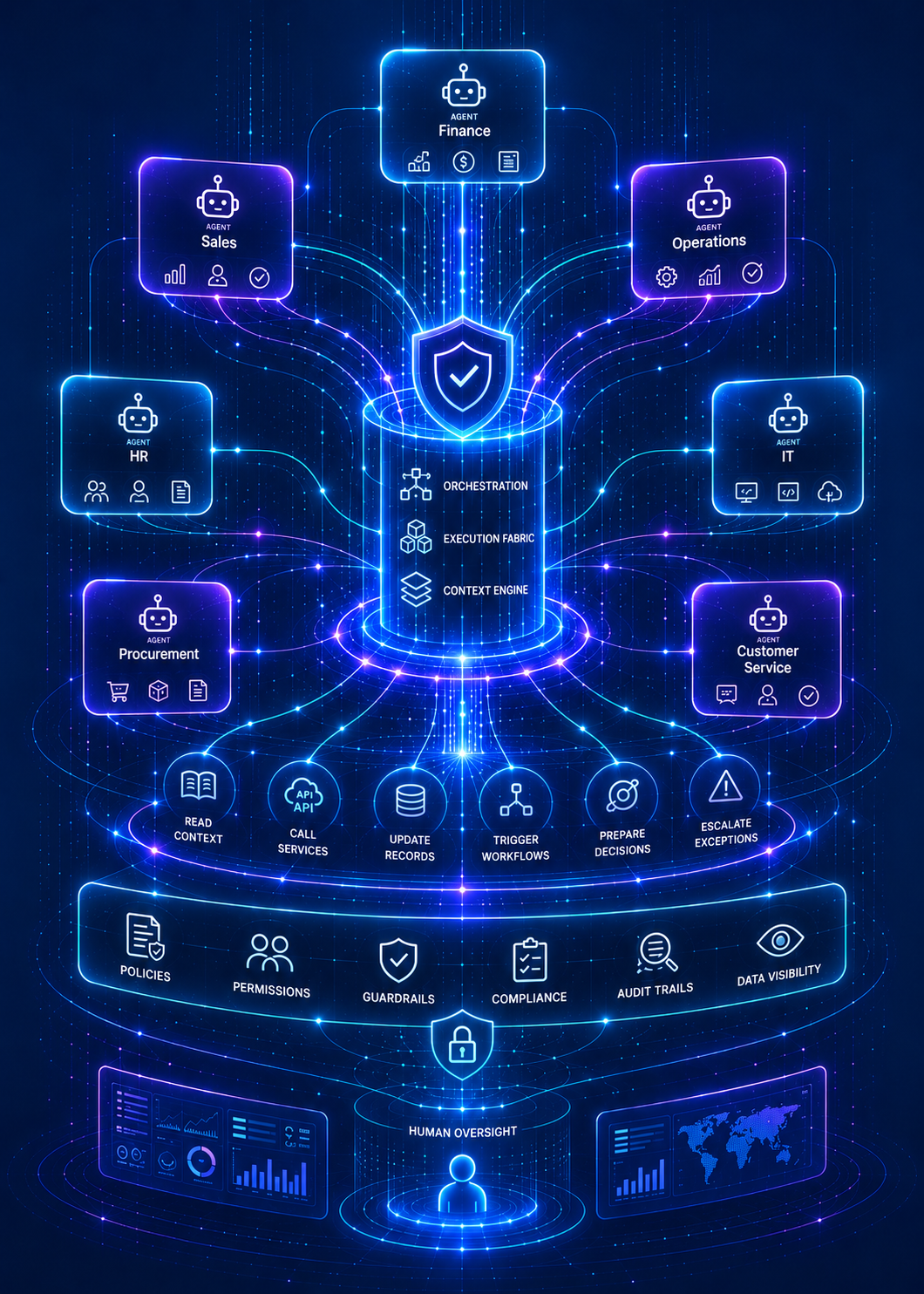
This is why Advanze repeats the control model across the site. AI agents can execute work only when the operating model gives them context, identity, permissions, policies, workflow, audit evidence and clear boundaries for human judgement.
- The classifier must understand hundreds of possible query types, from account opening and missing information to how-to requests, regulated complaints, payment instructions, fund transfers, invoices and service exceptions.
- The processing agent changes by intent. A bank balance request, a support query, a complaint, an invoice dispute and a transfer instruction all need different context, tools, permissions and approval paths.
- Guardrail agents protect the process around the processing agent. Personal data, financial exposure, legal commitments, compliance wording, CISO concerns and customer harm all need specialist review.
- Permissions matter. Some agents may only read data. Some may draft a response. Some may create a task or update a case. High-impact actions such as transfers, payments, invoices or account changes need explicit tool boundaries and human approval.