Skip to content

Platform Services

KYC Tax

API-first capabilities that every workflow and AI agent can reuse.

KYC Tax is delivered as a reusable platform service that can be consumed by applications, workflows, integrations and AI agents. Instead of rebuilding commodity capabilities in every project, teams use governed services through consistent APIs and operational controls.

Finance and operations professionals reviewing data, controls and exceptions.
KYC Tax starts with people trying to make the right call. Finance needs to reconcile bank, ledger and transaction records faster.

Composable Services / KYC Tax

Reusable services, not repeated projects

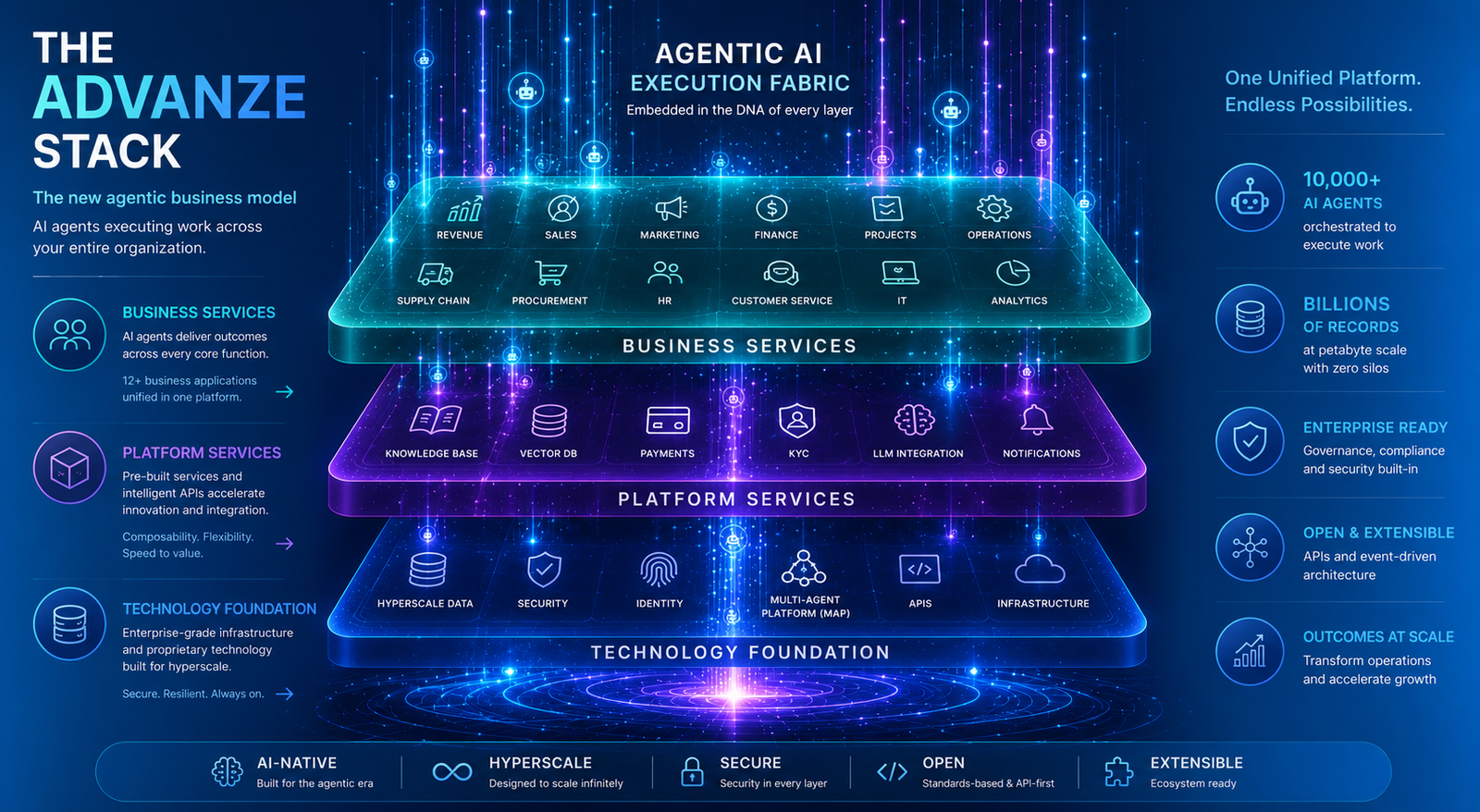
Advanze is positioned around the idea that enterprise software must evolve from passive systems of record into active systems of execution. In that model, this page is not just a feature description. It explains how KYC Tax contributes to an operating environment where people define intent, agents execute governed work, and leadership can see progress through unified data.

The value is strongest when the capability is connected to adjacent processes. Records, workflows, controls, communications and analytics should not live in separate tools. They should participate in a shared execution fabric that can coordinate work across departments while preserving human accountability.

Finance and operations professionals reviewing data, controls and exceptions.
Where KYC Tax becomes real work people can trust. Finance, data and control work made visible through review, exception handling and accountable decisions.

Core capabilities

What KYC Tax enables

Each capability is designed to work as part of the broader execution platform rather than as a disconnected module.

Tax ID Validation

Real-time verification of tax identification numbers against government registries. AI agents validate formats, check digit algorithms and registry status then flag invalid or inactive tax IDs while routing exceptions to customer service teams for correction and resubmission workflows.

Multi-Country Support

Tax ID validation across 150+ countries with localized format rules and validation logic. Agents handle region-specific requirements, translate error messages and apply country-specific compliance rules while maintaining consistent validation quality and customer experience across all markets.

Tax compliance workflow support

Automated US tax status determination and Form W-9/W-8 collection workflows. Agents identify US persons, route appropriate forms and validate submissions while maintaining IRS reporting readiness and ensuring timely 1099 and 1042-S filing for qualifying accounts and transactions.

CRS Reporting

Common Reporting Standard data collection and reporting file generation. Agents classify account holders by tax residency, gather self-certifications and compile CRS XML reports while coordinating submissions to tax authorities according to jurisdiction-specific deadlines and format requirements.

TIN Repository

Centralized storage of validated tax identification numbers with consent tracking. Agents maintain TIN records across customer lifecycle, handle updates and corrections and ensure data retention compliance while providing audit trail documentation for examiner review and regulatory inquiries.

Withholding Management

Automated backup withholding determination and processing for accounts without valid TINs. Agents calculate withholding amounts, generate required notices and coordinate with payment systems while maintaining compliance documentation and handling customer remediation when valid TINs are subsequently provided.

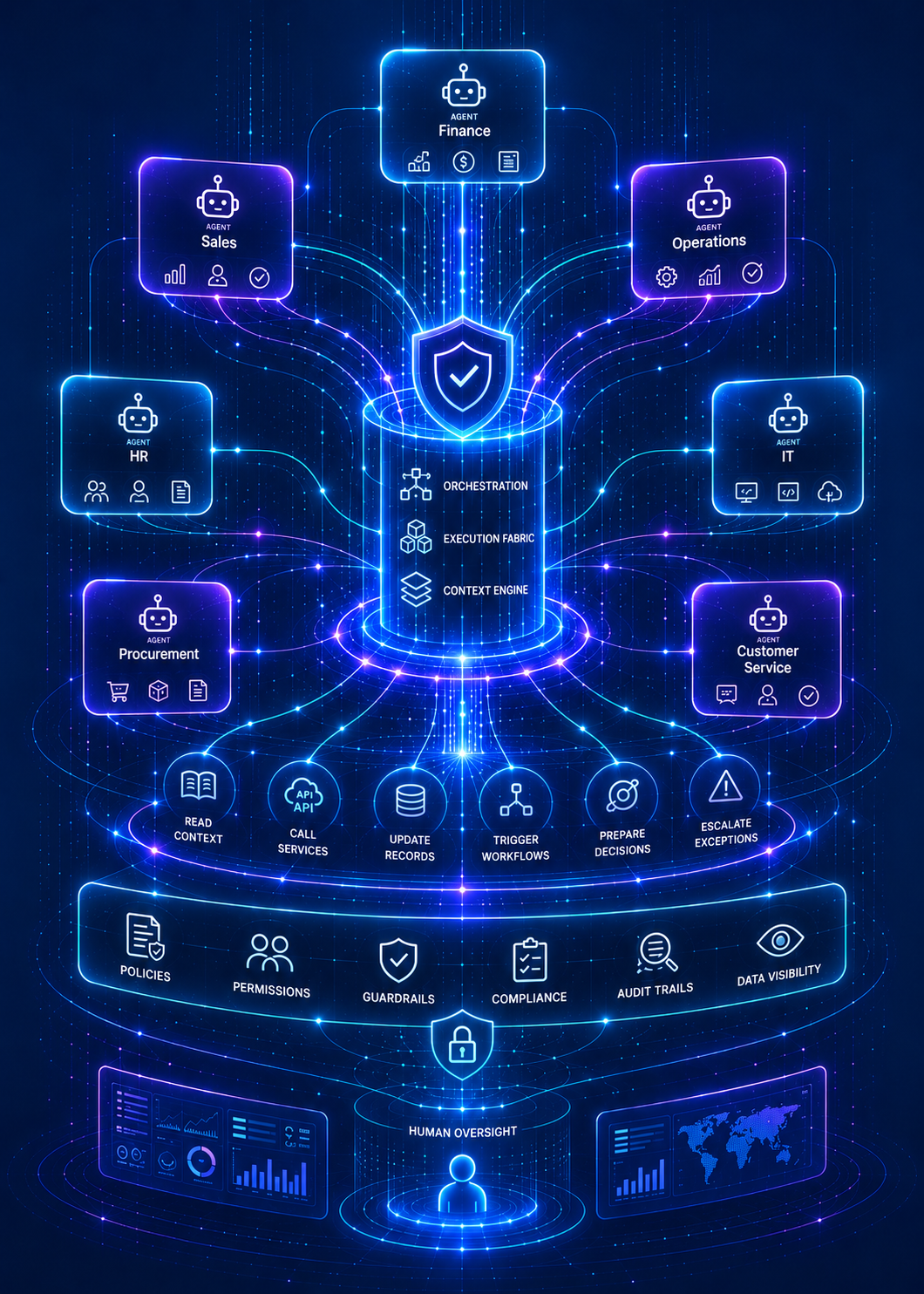
The Advanze Control Model - AI Agents Execute Work Inside the Control Model
>

Agentic operating model

AI agents execute work inside the control model

Advanze treats AI agents as participants in the operating model. Agents can read context, call services, update records, trigger workflows, prepare decisions and escalate exceptions. Human teams remain responsible for judgement, governance and business accountability.

That distinction matters. The goal is not to add another chatbot to existing systems. The goal is to create an execution platform where work can move across functions with consistent permissions, policies, audit trails and data visibility.

Business outcomes

What becomes possible

Reusable building blockStandardise the capability across products and workflows.
API-first deliveryExpose services to apps, automations and external integrations.
Agent-readyAllow agents to call services with policies and audit trails.
Faster innovationReduce custom build effort and accelerate delivery cycles.
Finance and operations professionals reviewing data, controls and exceptions.
The outcome is not just automation. It is confidence in what happens next. When KYC Tax runs inside a governed execution model, teams can move faster without losing judgement, accountability or trust.

Agentic use case

Where KYC Tax becomes governed execution.

Finance needs to reconcile bank, ledger and transaction records faster.

What makes it harder in the real world: Reconciliation touches financial controls, auditability, thresholds, reason codes, journal proposals, segregation of duties and evidence requirements. Speed without control can create material risk.

What Advanze changes: Use agents to gather statements, ledger extracts, rules and prior exceptions, then propose safe matches and route unresolved items for review without posting journals automatically.

Data Preparation AgentPulls statements, ledger extracts and transaction files for the same period.
Matching AgentApplies safe matching rules for exact matches, known offsets, reversals, duplicates and timing differences.
Finance Policy AgentChecks thresholds, reason codes, account mappings and approval requirements.
Exception AgentGroups unresolved items, proposes likely causes and drafts follow-up notes.
Human Finance ReviewerApproves exceptions, journal templates and material decisions.
Challenge

Reconciliation touches financial controls, auditability, thresholds, reason codes, journal proposals, segregation of duties and evidence requirements. Speed without control can create material risk.

Orchestration

Use agents to gather statements, ledger extracts, rules and prior exceptions, then propose safe matches and route unresolved items for review without posting journals automatically.

Success

Use agents to gather statements, ledger extracts, rules and prior exceptions, then propose safe matches and route unresolved items for review without posting journals automatically.

Finance and operations professionals reviewing data, controls and exceptions.
Finance control 5Finance, data and control work made visible through review, exception handling and accountable decisions.
Finance and operations professionals reviewing data, controls and exceptions.
Finance control 6Finance, data and control work made visible through review, exception handling and accountable decisions.
Finance and operations professionals reviewing data, controls and exceptions.
Finance control 7Finance, data and control work made visible through review, exception handling and accountable decisions.

Why AI execution needs architecture

The work needs context, controls and clear permissions before automation can safely act.

That is why the Advanze control model matters: identity, permissions, policies, workflow, audit evidence and human judgement are embedded into execution before agents act.

  • Reconciliation touches financial controls, auditability, thresholds, reason codes, journal proposals, segregation of duties and evidence requirements. Speed without control can create material risk.
  • The right agent must receive the right context, tools, permissions and approval path before work moves forward.
  • Audit evidence, exception handling and human judgement need to be part of the workflow, not notes added after the fact.

Implementation path

How to move from concept to production

Advanze can be introduced progressively. The recommended path is to start with a visible workflow, prove the operating model, then expand into adjacent capabilities as the platform foundation matures.

  1. 1
    Assess the current operating model

    Map the workflows, systems, data sources and manual coordination points around this capability.

  2. 2
    Design the target execution flow

    Define the data model, human approvals, agent tasks, service calls and governance controls.

  3. 3
    Launch a focused implementation wave

    Start with a bounded use case that proves the operating pattern and creates reusable platform assets.

  4. 4
    Scale across the business

    Extend the pattern to adjacent workflows, more agents, more users and deeper integrations.

Next step

Build this into your execution platform roadmap

Explore how KYC Tax can be implemented as part of a broader Advanze platform adoption programme, from first pilot to enterprise scale.