Agentic use case
Where BI Builder becomes governed execution.
A bad import or system change has corrupted business records.
What makes it harder in the real world: Data correction requires evidence, impact analysis, ownership, approval, rollback choice, downstream notification and audit trail. A fast fix without traceability can make the incident worse.
What Advanze changes: Detect bad data, classify impact, identify the source, route approval and restore or correct records with auditable point-in-time recovery.
Data Quality AgentDetects anomaly, schema drift, duplicates or invalid values.
Impact AgentIdentifies affected tables, records, processes, customers and downstream systems.
Recovery AgentProposes record-level, table-level or full restore options based on snapshots and change logs.
Data OwnerApproves correction or restore decision.
Notification AgentDrafts stakeholder updates and creates downstream reconciliation tasks.
ChallengeData correction requires evidence, impact analysis, ownership, approval, rollback choice, downstream notification and audit trail. A fast fix without traceability can make the incident worse.
OrchestrationDetect bad data, classify impact, identify the source, route approval and restore or correct records with auditable point-in-time recovery.
SuccessDetect bad data, classify impact, identify the source, route approval and restore or correct records with auditable point-in-time recovery.
Why AI execution needs architecture
The work needs context, controls and clear permissions before automation can safely act.
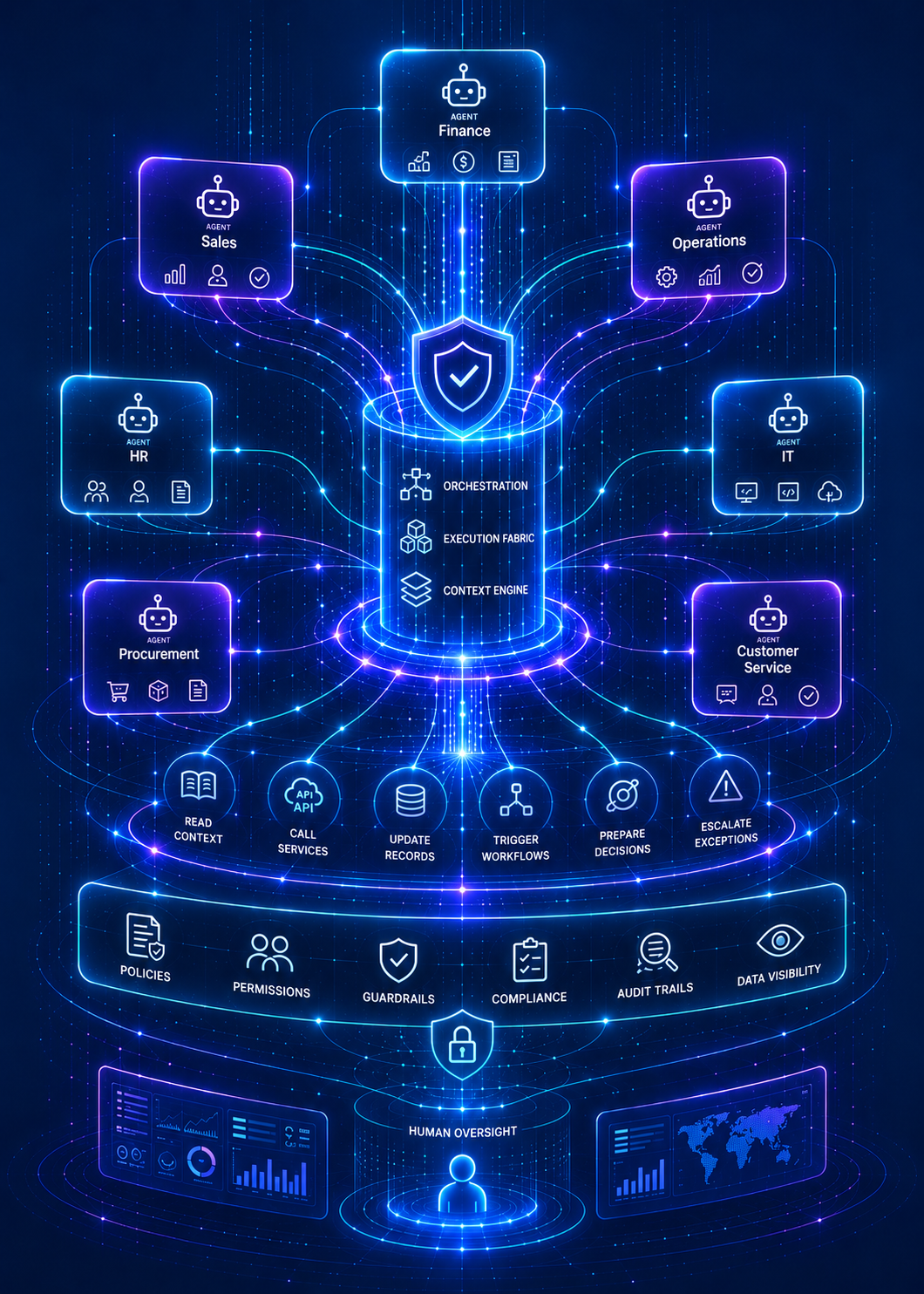
That is why the Advanze control model matters: identity, permissions, policies, workflow, audit evidence and human judgement are embedded into execution before agents act.
- Data correction requires evidence, impact analysis, ownership, approval, rollback choice, downstream notification and audit trail. A fast fix without traceability can make the incident worse.
- The right agent must receive the right context, tools, permissions and approval path before work moves forward.
- Audit evidence, exception handling and human judgement need to be part of the workflow, not notes added after the fact.