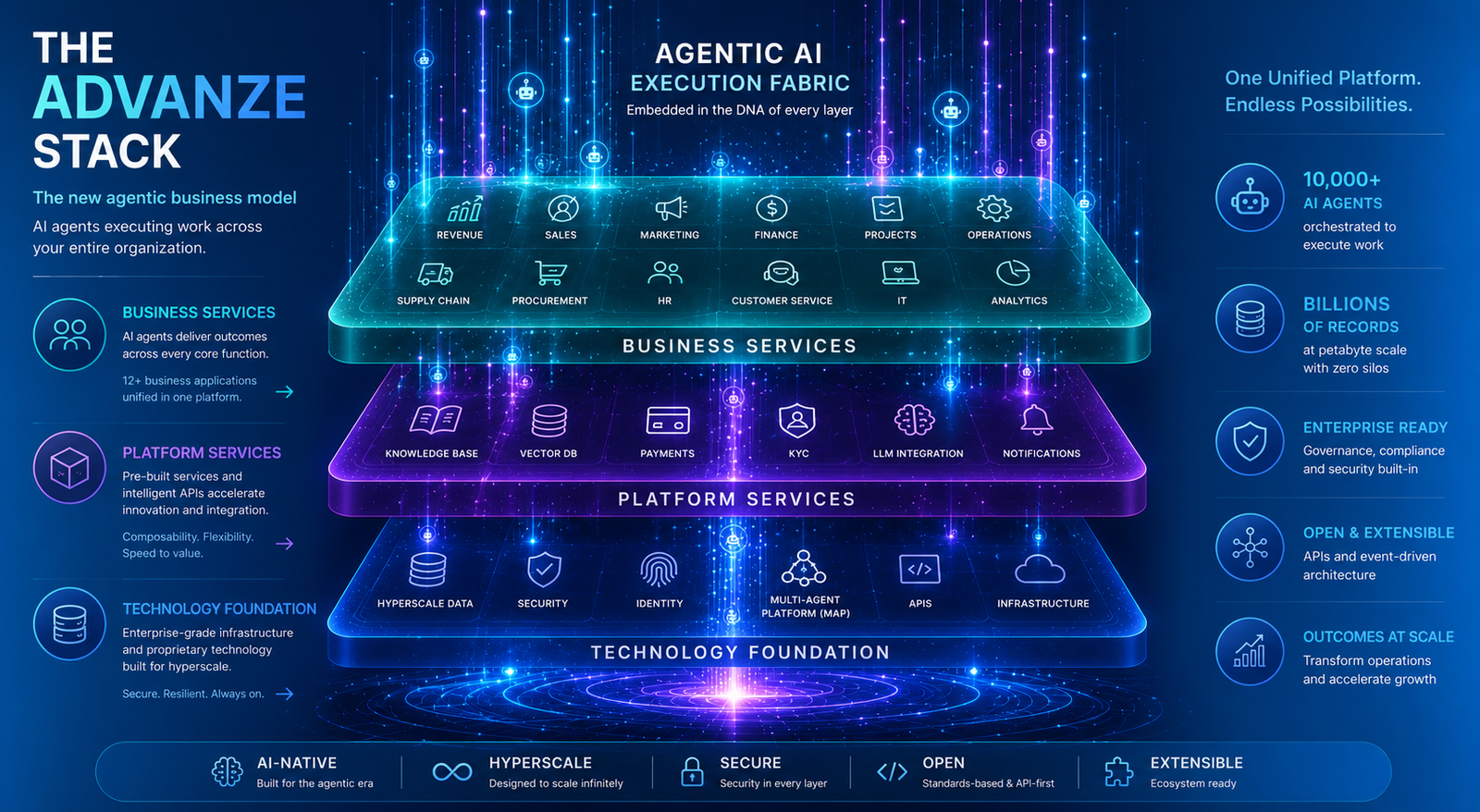
Agentic use case
Where Supply Chain becomes governed execution.
A team needs approval to buy goods or services.
What makes it harder in the real world: Procurement decisions often involve budget checks, vendor onboarding, sanctions or risk checks, contract terms, delegated authority, regional approval rules and finance controls.
What Advanze changes: Use agents to check purchase context, budget, supplier risk, contract terms and approval thresholds before procurement action is completed.
Procurement AgentClassifies request, validates required fields and identifies supplier or category rules.
Budget AgentChecks cost centre, budget availability and financial thresholds.
Supplier Risk AgentChecks supplier records, onboarding status, sanctions, performance and risk flags.
Contract AgentReviews terms, renewal obligations, payment clauses and policy exceptions.
Approval Orchestration AgentRoutes approvals according to amount, department, region and category.
ChallengeProcurement decisions often involve budget checks, vendor onboarding, sanctions or risk checks, contract terms, delegated authority, regional approval rules and finance controls.
OrchestrationUse agents to check purchase context, budget, supplier risk, contract terms and approval thresholds before procurement action is completed.
SuccessUse agents to check purchase context, budget, supplier risk, contract terms and approval thresholds before procurement action is completed.
Why AI execution needs architecture
The work needs context, controls and clear permissions before automation can safely act.
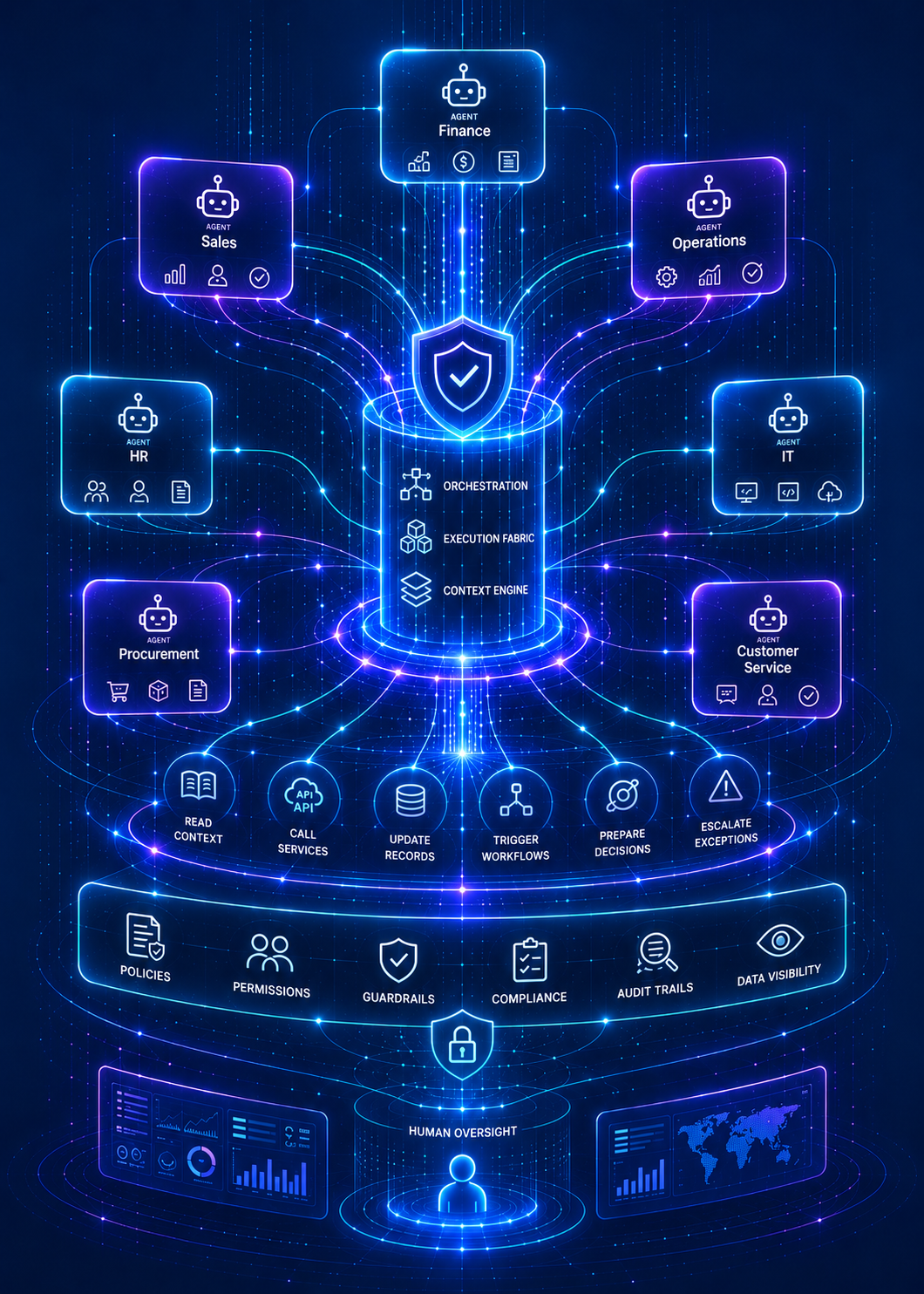
That is why the Advanze control model matters: identity, permissions, policies, workflow, audit evidence and human judgement are embedded into execution before agents act.
- Procurement decisions often involve budget checks, vendor onboarding, sanctions or risk checks, contract terms, delegated authority, regional approval rules and finance controls.
- The right agent must receive the right context, tools, permissions and approval path before work moves forward.
- Audit evidence, exception handling and human judgement need to be part of the workflow, not notes added after the fact.