Skip to content

Execution Platform

Document Management

Unified data, services, workflows and agents in one operating substrate.

Document Management is part of the Advanze platform layer: the execution foundation that enables applications, services and AI agents to work as one operating system for the business. It is designed for extensibility, governance and scale from the start.

Professionals reviewing contracts, documents and obligations through a controlled process.
Document Management starts with people trying to make the right call. A contract needs to be reviewed or renewed.

Execution Platform / Document Management

Built as an execution foundation

Advanze is positioned around the idea that enterprise software must evolve from passive systems of record into active systems of execution. In that model, this page is not just a feature description. It explains how Document Management contributes to an operating environment where people define intent, agents execute governed work, and leadership can see progress through unified data.

The value is strongest when the capability is connected to adjacent processes. Records, workflows, controls, communications and analytics should not live in separate tools. They should participate in a shared execution fabric that can coordinate work across departments while preserving human accountability.

Professionals reviewing contracts, documents and obligations through a controlled process.
Where Document Management becomes real work people can trust. Contract, document and obligation review moving through specialist judgement and controlled routing.

Core capabilities

What Document Management enables

Each capability is designed to work as part of the broader execution platform rather than as a disconnected module.

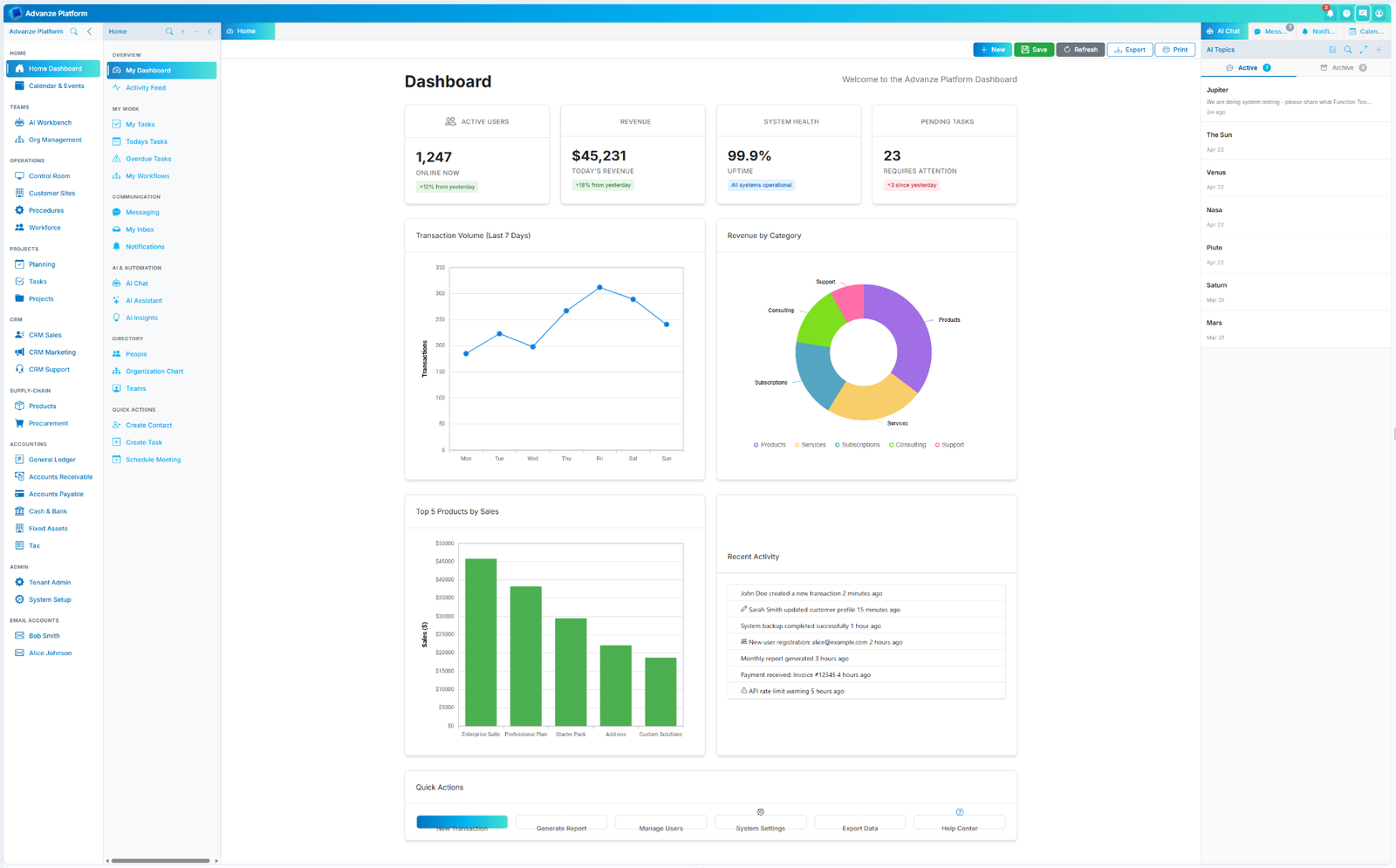
Hierarchical File Storage

Enterprise file system with folders, permissions and metadata management. Supports billions of files with instant search across content and metadata. Native integration with platform applications eliminates external storage dependencies.

Version Control & History

Automatic versioning captures every document change with full audit trail. Compare versions side-by-side to track modifications. Restore previous versions with single click.

Granular Access Control

Folder and file-level permissions control who can view, edit, share or delete content. Inherited permissions simplify management of deep hierarchies. Temporary access links enable secure external sharing with expiration dates.

Full-Text Search

Lightning-fast search indexes document content, metadata and comments. Find files by keyword, author, date or custom properties. Search results respect user permissions automatically.

Team Collaboration

Co-authoring and commenting enable real-time collaboration on shared documents. Activity feeds show who accessed or modified files. @mentions notify team members of relevant changes.

Workflow Integration

Documents participate in approval workflows and business processes. Attach files to records across platform applications. AI agents can read, analyze and generate documents as part of automated workflows.

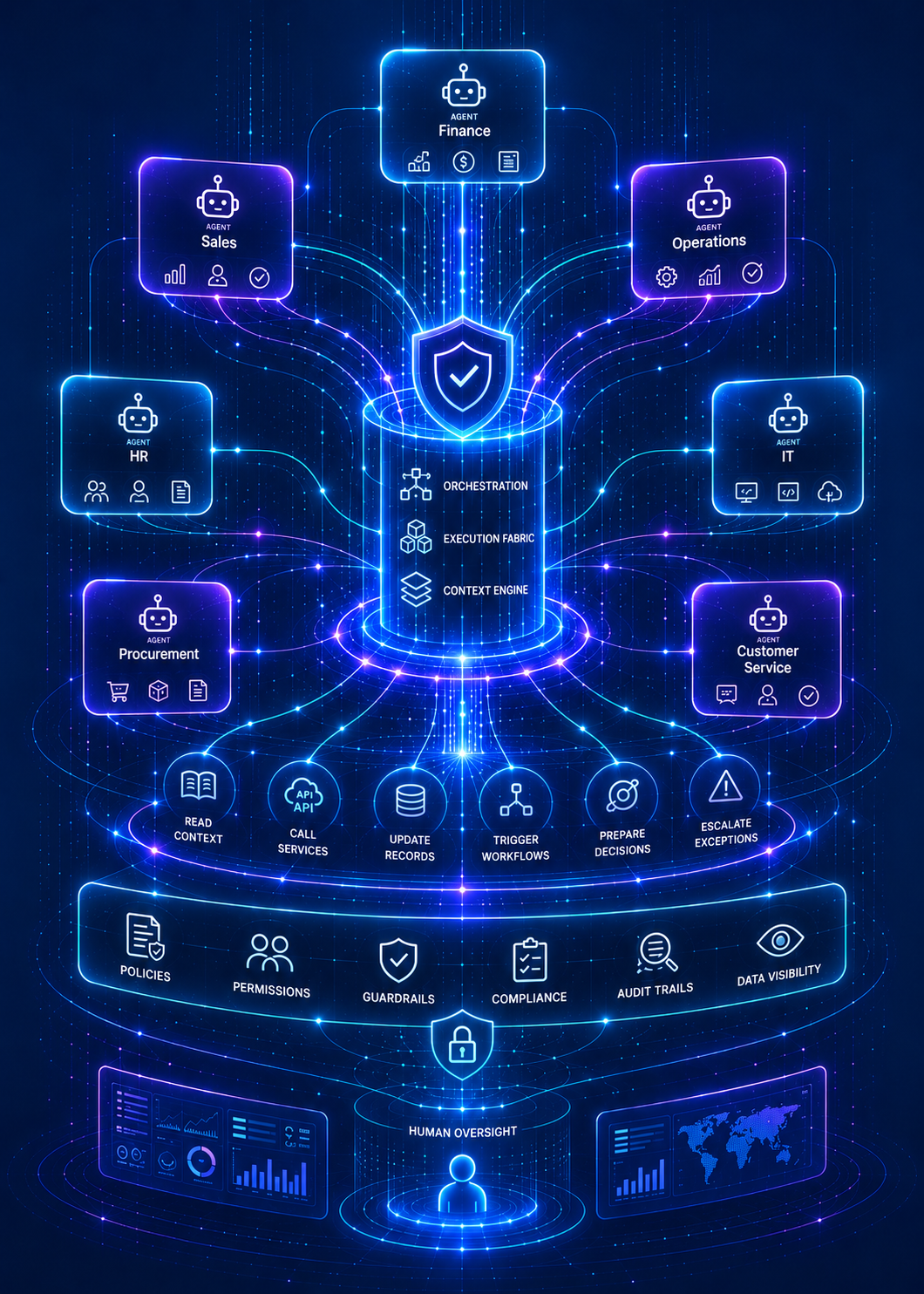
The Advanze Control Model - AI Agents Execute Work Inside the Control Model

Agentic operating model

AI agents execute work inside the control model

Advanze treats AI agents as participants in the operating model. Agents can read context, call services, update records, trigger workflows, prepare decisions and escalate exceptions. Human teams remain responsible for judgement, governance and business accountability.

That distinction matters. The goal is not to add another chatbot to existing systems. The goal is to create an execution platform where work can move across functions with consistent permissions, policies, audit trails and data visibility.

Business outcomes

What becomes possible

Scale by designArchitecture supports growing workloads, data and agent activity.
Governed automationSecurity, identity and controls are embedded in execution paths.
Composable servicesTeams can build faster using reusable platform capabilities.
Operational confidenceTelemetry and auditability make execution observable.
Professionals reviewing contracts, documents and obligations through a controlled process.
The outcome is not just automation. It is confidence in what happens next. When Document Management runs inside a governed execution model, teams can move faster without losing judgement, accountability or trust.

Agentic use case

Where Document Management becomes governed execution.

A contract needs to be reviewed or renewed.

What makes it harder in the real world: Contracts contain commercial, legal, data, security, compliance and operational commitments. Missed obligations create downstream risk long after signature.

What Advanze changes: Review contracts for obligations, risks, pricing terms, renewal dates, data clauses and approval requirements before signature or operational handoff.

Document Extraction AgentExtracts parties, terms, dates, clauses, obligations and annexures.
Legal Review AgentFlags legal risks, non-standard clauses and approval requirements.
Commercial AgentChecks pricing, renewal, termination, billing and service terms.
Security and Data AgentChecks data processing, confidentiality, access, residency and security obligations.
Obligation AgentCreates tasks for deliverables, reviews, renewals and compliance evidence.
Challenge

Contracts contain commercial, legal, data, security, compliance and operational commitments. Missed obligations create downstream risk long after signature.

Orchestration

Review contracts for obligations, risks, pricing terms, renewal dates, data clauses and approval requirements before signature or operational handoff.

Success

Review contracts for obligations, risks, pricing terms, renewal dates, data clauses and approval requirements before signature or operational handoff.

Professionals reviewing contracts, documents and obligations through a controlled process.
Contract review 9Contract, document and obligation review moving through specialist judgement and controlled routing.
Professionals reviewing contracts, documents and obligations through a controlled process.
Contract review 10Contract, document and obligation review moving through specialist judgement and controlled routing.
Professionals reviewing contracts, documents and obligations through a controlled process.
Contract review 11Contract, document and obligation review moving through specialist judgement and controlled routing.

Why AI execution needs architecture

The work needs context, controls and clear permissions before automation can safely act.

That is why the Advanze control model matters: identity, permissions, policies, workflow, audit evidence and human judgement are embedded into execution before agents act.

  • Contracts contain commercial, legal, data, security, compliance and operational commitments. Missed obligations create downstream risk long after signature.
  • The right agent must receive the right context, tools, permissions and approval path before work moves forward.
  • Audit evidence, exception handling and human judgement need to be part of the workflow, not notes added after the fact.

Implementation path

How to move from concept to production

Advanze can be introduced progressively. The recommended path is to start with a visible workflow, prove the operating model, then expand into adjacent capabilities as the platform foundation matures.

  1. 1
    Assess the current operating model

    Map the workflows, systems, data sources and manual coordination points around this capability.

  2. 2
    Design the target execution flow

    Define the data model, human approvals, agent tasks, service calls and governance controls.

  3. 3
    Launch a focused implementation wave

    Start with a bounded use case that proves the operating pattern and creates reusable platform assets.

  4. 4
    Scale across the business

    Extend the pattern to adjacent workflows, more agents, more users and deeper integrations.

Next step

Build this into your execution platform roadmap

Explore how Document Management can be implemented as part of a broader Advanze platform adoption programme, from first pilot to enterprise scale.